Creation and implementation belong together
Gamut explored building colour palettes. Saer takes the broader problem: create a usable design system, then inspect the code that is supposed to follow it. Saer Create covers colour, typography, shape and density. The local scanner reconstructs declared foundations and compares them with actual usage.
A system you can inspect before exporting
The public Create interface exposes OKLCH scales, contrast ratios, heading and body fonts, a type scale, radius, elevation and density. A light and dark interface preview puts those choices together. Exports include CSS, Tailwind, shadcn/ui and design tokens; saer-system.json carries the system into the CLI workflow.
Keep exact and inferred findings apart
A literal equal to a declared token is a different kind of evidence from a value merely close to one.
A near-match is a review decision. Static accessibility checks are source findings, not a claim that the rendered interface conforms to WCAG.
Give the system to the agent
The full product’s local MCP interface hands tokens, components and guidance to a coding agent before a task, and checks its changes afterwards. Scanning is deterministic and local: code, reports and paths stay on the device, and optional cloud summaries are a separate, opt-in flow.
Read first, change deliberately
- Gave up
- An audit does not silently rewrite the code to make every finding disappear.
- Got
- The scan is read-only apart from its report. Reviewed fixes, agent setup and creating a system are separate actions with their own write boundaries.
Limits
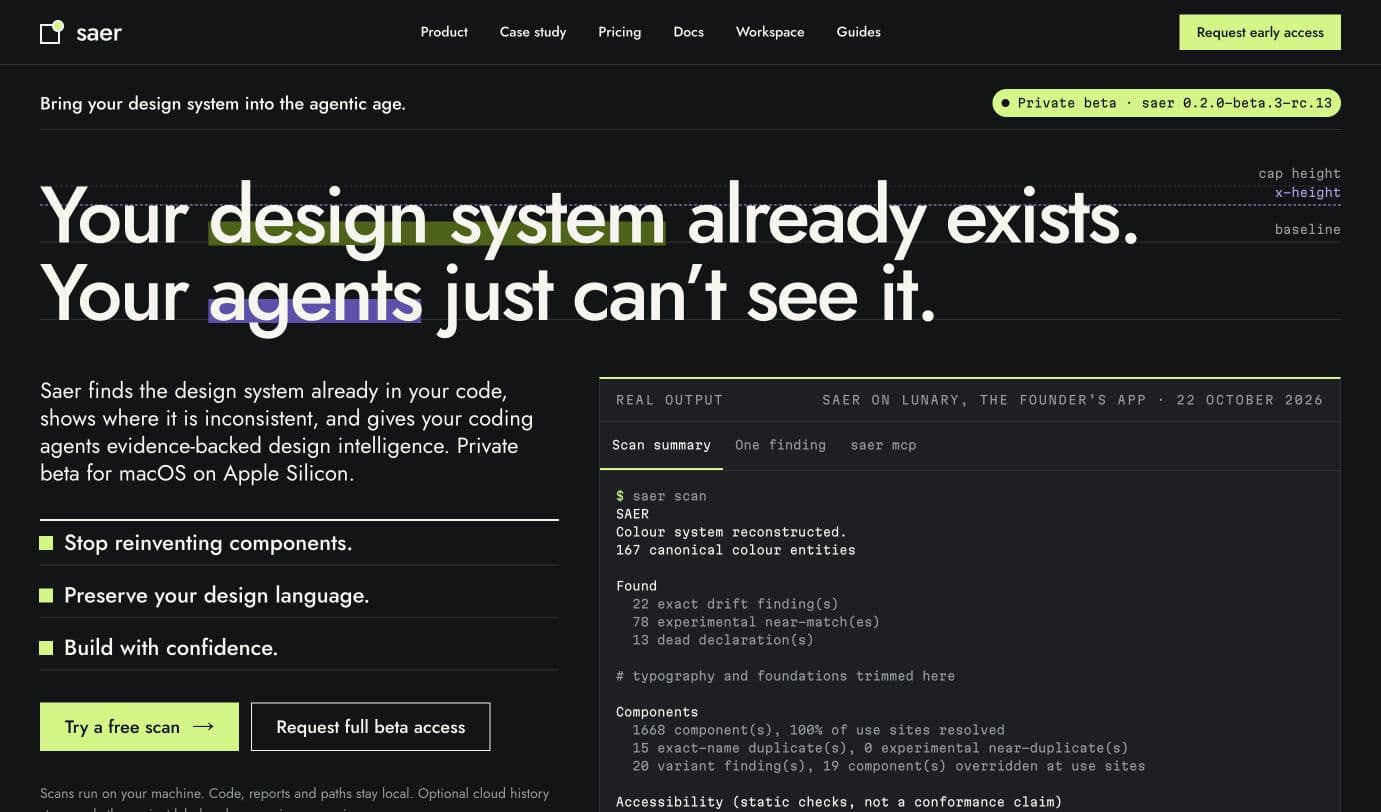
Saer is in private beta and currently targets macOS on Apple Silicon. The Create tool is public in the browser. A published scan of Lunary shows what a real report looks like.